Statutory Compliance Inspections for Buildings
June 22, 2026
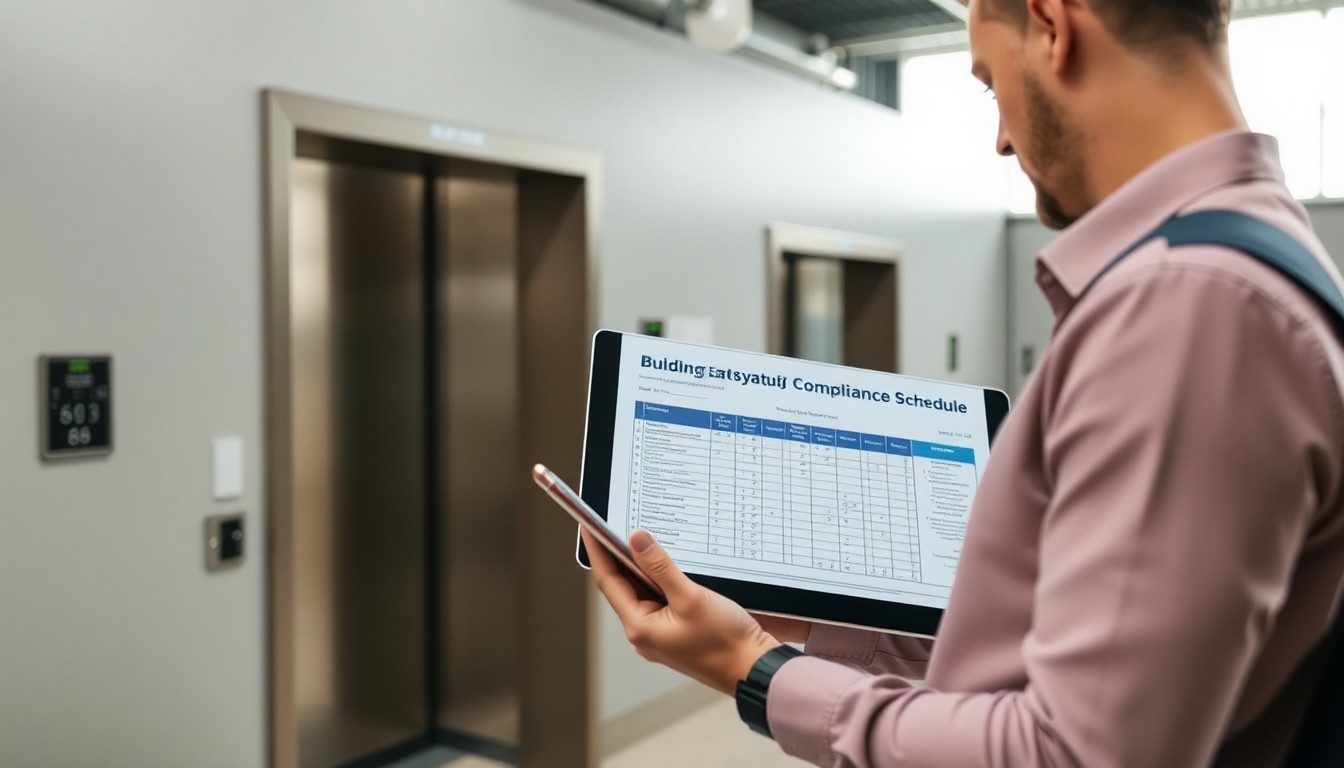
Statutory compliance inspections are the inspections, tests, and examinations a building is legally required to have carried out at defined intervals to keep it safe and compliant. They span fire safety, electrical, gas, water, lifting equipment, and more. Missing them isn't just an operational lapse — it can be a breach of the law, invalidate insurance, and, most importantly, put people at risk. Managing them is one of the core responsibilities of anyone running a building or portfolio.
This article gives an overview. Specific requirements, intervals, and who must carry them out vary by jurisdiction and building; always confirm what applies to your premises.
What "statutory" means here
"Statutory" means required by law or regulation, as opposed to recommended good practice. For these inspections, the duty-holder doesn't have discretion over whether they happen — only over ensuring they're done, on time, by competent or accredited people, and recorded. They're often called "hard FM compliance" and are frequently summarised as an organisation's "statutory compliance" or "SFG20-type" obligations.
Common areas of statutory compliance
While the detail varies, statutory compliance inspections commonly cover:
- Fire safety — fire risk assessment, fire alarm and detection, emergency lighting, extinguishers, fire doors, dampers.
- Electrical — fixed wiring inspection (periodic), portable appliances (risk-based), emergency lighting.
- Gas — gas safety checks and servicing by registered engineers.
- Lifting equipment — thorough examination of lifts, hoists, and lifting accessories (e.g. LOLER in the UK).
- Pressure systems — examination of pressure vessels and systems.
- Water hygiene — legionella risk assessment and control.
- Asbestos — duty to manage, surveys, and re-inspection.
- Local exhaust ventilation (LEV) — examination where used.
- Other — depending on the building (e.g. air conditioning inspections, energy assessments).
The defining challenge: the schedule
The hardest part of statutory compliance isn't any single inspection — it's keeping track of all of them, each on its own interval, across one or many buildings, and ensuring none is missed. A single overlooked statutory inspection can mean a serious safety gap and a legal exposure. This is fundamentally a scheduling and record-keeping challenge.
Competence and certification
Most statutory inspections must be carried out by competent or accredited persons (registered gas engineers, competent electrical inspectors, accredited asbestos surveyors, etc.), and they produce certificates or reports. Part of compliance management is ensuring the right qualified people do the work and that the resulting certificates are captured and retained.
Records are the proof
For statutory compliance, the record is the compliance, in the sense that demonstrating compliance depends on holding the certificates, reports, and inspection records. If you can't show a current valid record for a required inspection, you effectively can't demonstrate compliance — even if the work was done. Centralised, current, accessible records are essential.
Acting on findings
Statutory inspections often identify remedial actions. Compliance isn't complete until those actions are addressed — an inspection that flags a defect and is then ignored leaves the risk in place. Tracking remedial actions to closure is part of the obligation.
Capturing it digitally
Managing statutory compliance across a building or portfolio — many inspection types, many intervals, certificates, and remedial actions — is exactly what compliance and inspection software is built for: scheduling each required inspection, flagging what's due, storing certificates, tracking remedial actions, and giving a clear, demonstrable compliance picture.
Key takeaways
Statutory compliance inspections are legally required inspections and tests across fire, electrical, gas, water, lifting equipment, asbestos, and more, each at defined intervals and by competent people. The core challenge is the schedule — ensuring none is missed across the portfolio — and the proof is the records. Manage the schedule, hold the certificates, and track remedial actions to closure.
Requirements vary by jurisdiction and building. This is general information; confirm the statutory obligations that apply to your premises.
Get the Site Audit app
Capture issues, generate reports and finish audits faster — right from your phone.


Site Audit is a free construction site audit app for contractors — download the app or see pricing.