Electrical Installation Inspection Checklist
June 21, 2026
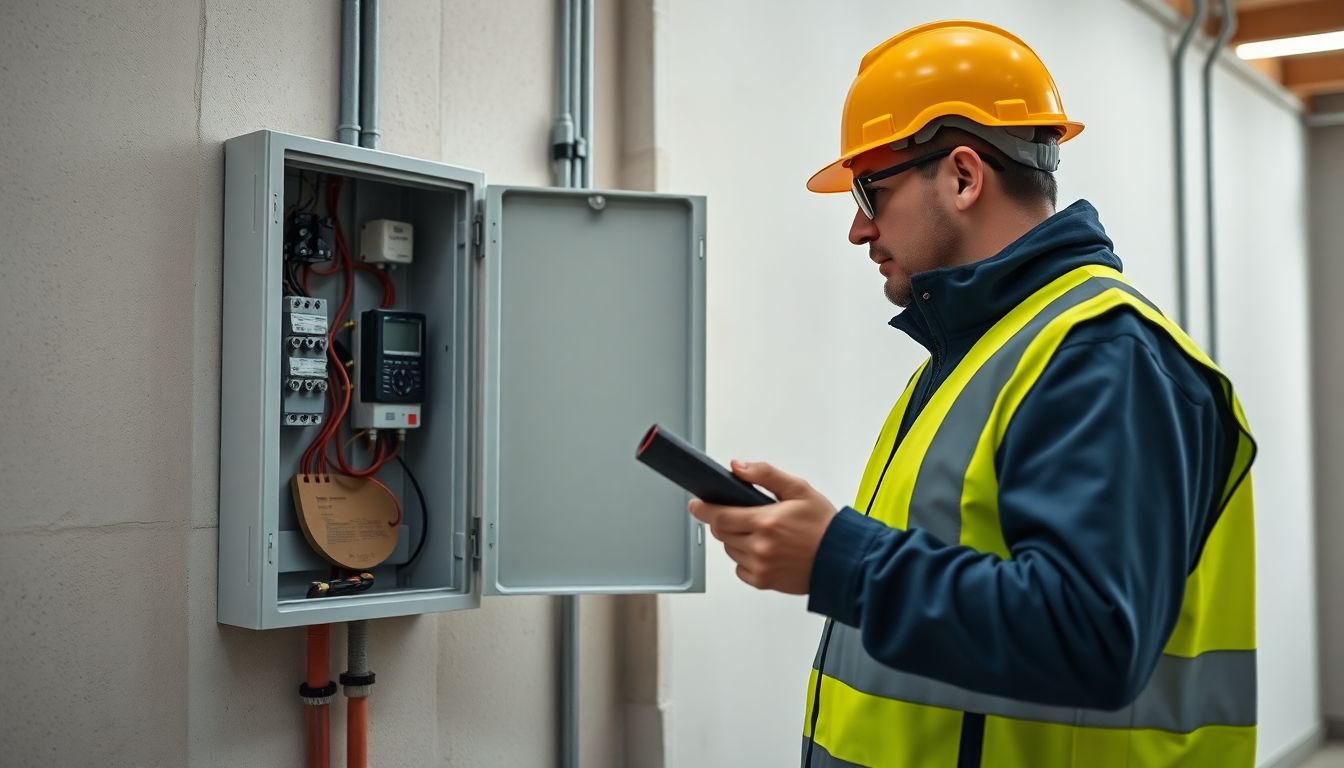
Electrical installations are safety-critical and heavily regulated. Testing, certification, and sign-off must be carried out by a competent, qualified electrician to the relevant wiring regulations — that's not optional and not something a general site inspection replaces. What a site inspection checklist can do is give site managers and clerks of works a framework to monitor progress, coordinate trades, and confirm that the right certified checks and records are in place at each stage.
This checklist is a project-management aid, not a substitute for electrical testing and certification by a qualified person.
First fix (before walls are closed)
This is a key coordination stage, because once plastered the cabling is concealed:
- Cable routes installed per drawings and coordinated with other services.
- Cables protected where they pass through structure; correct depth/safe zones.
- Back boxes positioned at the correct heights and locations.
- Cabling supported and not damaged.
- Any concealed work photographed before being covered.
- Fire-stopping at penetrations planned/installed.
Consumer unit and distribution
- Consumer unit/distribution board located and fixed per design.
- Circuits labelled and as per the schedule.
- Correct protective devices installed per the design.
- Enclosure secure and appropriate for the location.
Second fix and accessories
- Sockets, switches, and accessories installed level and at correct heights.
- Correct accessories per specification.
- Faceplates undamaged and consistent.
- Light fittings installed per design.
Earthing and bonding
- Main earthing and protective bonding installed (verified by the electrician).
- Bonding to services where required.
Testing and certification (by a qualified electrician)
The actual testing must be done by the competent person, but the site team should confirm the records exist:
- Inspection and testing carried out and recorded.
- Electrical Installation Certificate (or equivalent for your region) issued.
- Test results within required limits.
- Any remedial work completed and re-tested.
- Certification handed over for the project records and building control where required.
Coordination and progress checks
- Electrical work aligned with the programme.
- Coordinated with other trades (no clashes, correct sequence).
- Penetrations fire-stopped.
- Builder's work (chases, openings) complete and made good.
Documentation
- Certificates and test results filed.
- As-installed information and circuit schedules provided.
- Manufacturer documentation for equipment retained for the O&M manual.
Why the first-fix photos matter
As with other concealed work, the cabling disappears behind plaster. Photographs of the first-fix routes before they're covered are valuable evidence of what's in the walls — useful for future maintenance and for resolving any later question. Capture them deliberately.
Capturing it digitally
A site inspection app helps the site team run the coordination and progress checklist, photograph first-fix routes before closing up, and confirm that certificates and test records are in place against the project — keeping the management record complete alongside the electrician's formal certification.
Key takeaways
Electrical testing and certification must be done by a qualified electrician to the wiring regulations — a site checklist supports coordination and record-keeping, not testing. Focus the site inspection on first-fix coordination, concealed-route photos before closing up, correct installation of accessories, fire-stopping, and — critically — confirming that the electrician's inspection, testing, and certification are complete and on file.
Get the Site Audit app
Capture issues, generate reports and finish audits faster — right from your phone.


Site Audit is a free construction site audit app for contractors — download the app or see pricing.