Temporary Works and the Temporary Works Coordinator
November 27, 2026
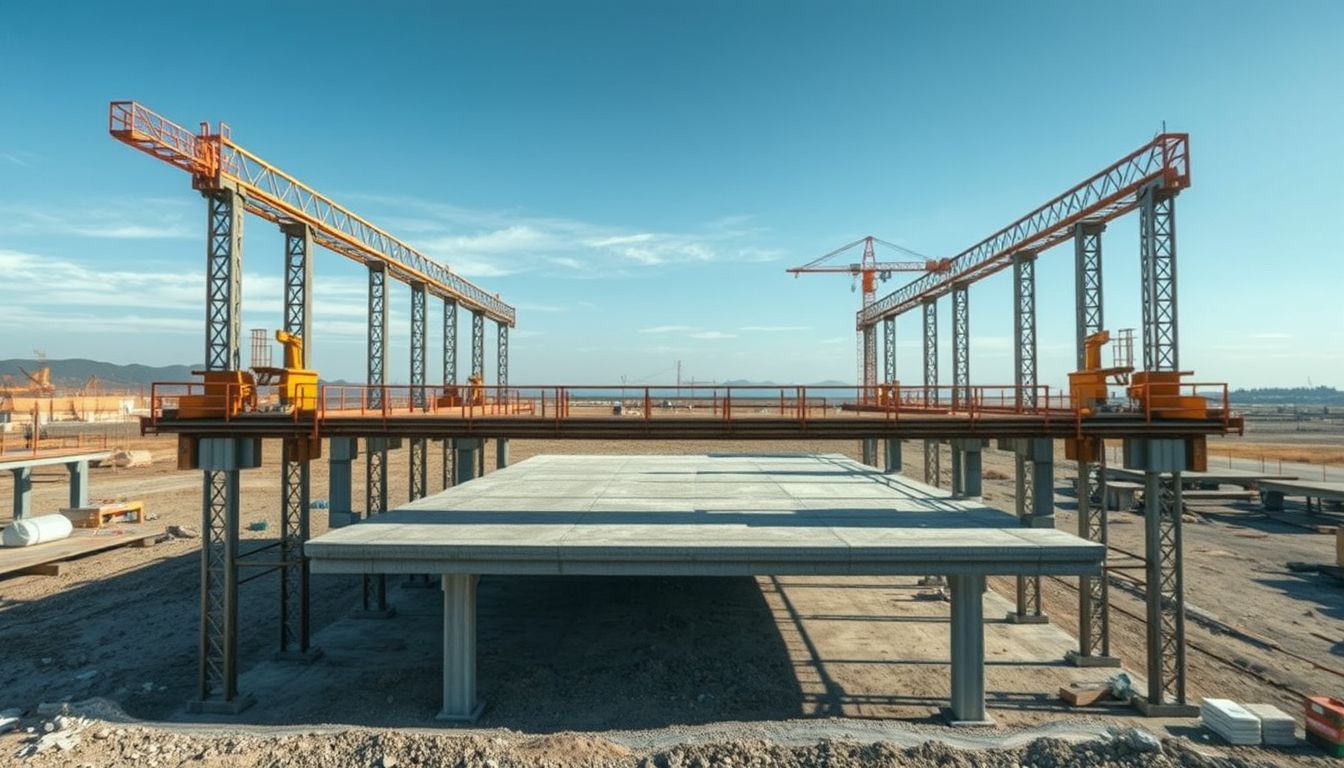
Temporary works are the structures that hold everything up while the permanent works are being built — formwork, falsework, props, excavation support, scaffolding, façade retention. They're temporary, but a failure is often sudden and catastrophic. That's why temporary works have their own control process and a dedicated coordinator. Here's how it works.
What counts as temporary works
Anything engineered to support construction that isn't part of the finished building: falsework and formwork for concrete, propping, trench and excavation support, crane bases, hoardings, needling and façade retention. If it carries load during construction and comes out (or is subsumed) later, it's temporary works.
Why they're high-risk
Temporary works carry real loads, often at the most vulnerable stage of a build, and failures tend to be rapid — a formwork collapse during a pour, a trench collapse, a falsework failure. The consequences are frequently fatal, which is why they're managed formally rather than left to on-site judgement.
The Temporary Works Coordinator (TWC)
The TWC is the person responsible for coordinating the control of temporary works — making sure each item is designed, checked, erected to the design, inspected, and formally permitted to load and to strike (dismantle). The TWC doesn't necessarily design them, but owns the process that ensures nothing gets loaded without the right checks.
The control process
- A temporary works register listing every item
- A design and an independent design check, proportionate to risk
- Erection to the approved design
- Inspection before loading — a hold point
- A permit to load, and later a permit to strike
- Records kept throughout
The permit to load and permit to strike are the critical hold points — nothing bears load, and nothing is removed, without sign-off. See Witness and Hold Points in Construction QA.
Where SiteAudit fits
SiteAudit lets you inspect temporary works against the design, record the checks with photos, and capture permit-to-load and permit-to-strike sign-offs — so each item is verified and formally authorised before it carries load or comes down.
Related articles
Get the Site Audit app
Capture issues, generate reports and finish audits faster — right from your phone.


Site Audit is a free construction site audit app for contractors — download the app or see pricing.