Excavation & Trench Safety Checklist
June 18, 2026
Free download · no email required
Excavation & Trench Safety Checklist
Daily excavation inspection covering support, access, services, edge protection and atmosphere.
Prefer not to retype it? SiteAudit runs this on your phone offline, attaches photos to every line and exports a signed PDF before you leave site. See all templates.
Excavations and trenches are deceptively dangerous. A collapse can happen in seconds, and even a shallow trench holds enough soil to crush or suffocate someone. Strict controls and daily checks are essential.
The main hazards
- Collapse — unsupported or unbattered sides giving way
- Falls — people or vehicles falling into the excavation
- Buried services — striking gas, electric, or water lines
- Flooding and water ingress
- Hazardous atmospheres in deep or confined excavations
- Materials and spoil falling back in from the edge
Daily checklist
- Sides supported, battered, or benched as the design requires
- Edge protection and barriers in place
- Spoil stored well back from the edge
- Safe access — ladders or ramps, properly positioned
- Services located and marked before digging
- Inspection by a competent person before each shift
Inspect before every shift
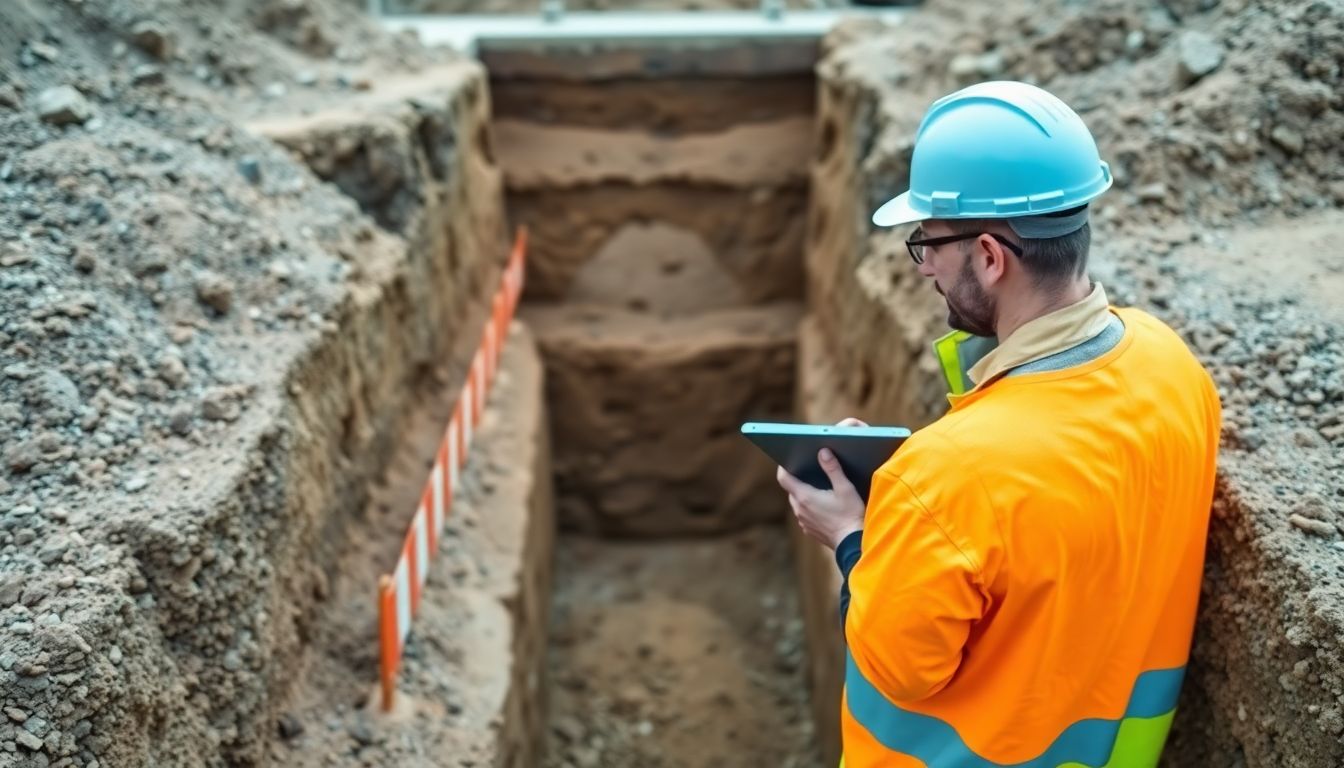
Excavation supports must be inspected at the start of every shift and after any event that could affect stability — rain, vibration, or a knock from plant. The ground changes; yesterday's safe trench may not be safe today.
Record the inspection
Excavation inspections need a written record. A digital check — photographing the supports and edges, flagging any movement — gives you a dated, defensible record at the start of each shift. SiteAudit makes excavation checks quick and keeps the evidence in one place.
Free download · no email required
Excavation & Trench Safety Checklist
Daily excavation inspection covering support, access, services, edge protection and atmosphere.
How to use it
- Excavations must be inspected by a competent person at the start of every shift, after any event likely to have affected stability, and after any accidental fall of material.
- Ground that stood safely yesterday can fail today. Rain, vibration and surcharge from spoil all change the picture overnight.
- Nobody enters an unsupported excavation because it is 'only for a minute'. Most fatalities are in trenches under 2 m deep.
- Record the inspection even when everything is satisfactory — the value of the register is the unbroken sequence.
Prefer not to retype it? SiteAudit runs this on your phone offline, attaches photos to every line and exports a signed PDF before you leave site. See all templates.
Get the Site Audit app
Capture issues, generate reports and finish audits faster — right from your phone.


Site Audit is a free construction site audit app for contractors — download the app or see pricing.