How to Run a Snagging Inspection
June 18, 2026
What is snagging?
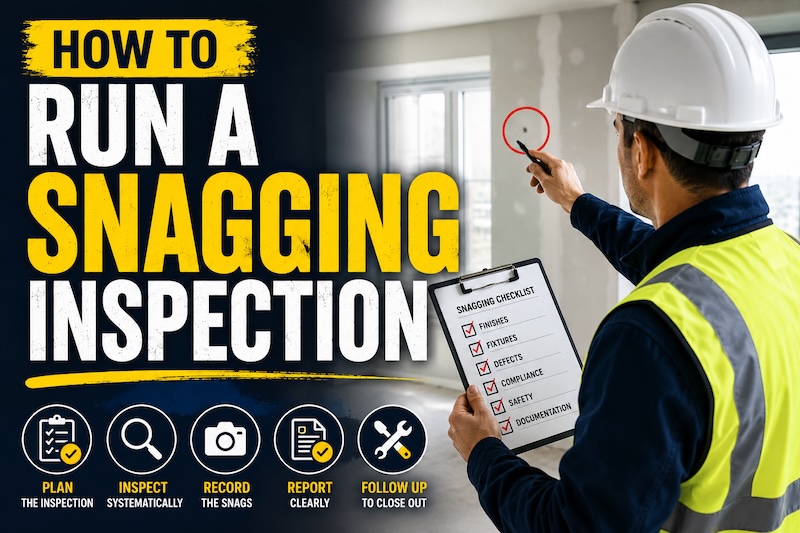
Snagging is the process of identifying defects and unfinished work before a project is handed over. A "snag" is any item that doesn't meet the required standard — a chipped tile, a door that won't close, a missing seal, paint on a window frame. A good snagging inspection finds these issues while the trades are still on site and the fixes are cheap.
Skip it, and those defects become the client's first impression — or worse, a costly callback after handover.
When to snag
Don't wait until the very end. Run snagging in stages:
- First fix — before walls are closed up, check pipework, cabling, and structural elements.
- Second fix — once fittings, finishes, and fixtures are in.
- Pre-handover — a full sweep of every room before the client walks through.
Catching issues at first fix is dramatically cheaper than discovering them behind a finished wall.
How to run the inspection
Work room by room, in a consistent order, so nothing gets skipped. For each room, check methodically: floors, walls, ceiling, doors, windows, fittings, and services. Look, but also operate things — open every door, flick every switch, run every tap.
For each defect, record three things: what the issue is, where it is, and a photo. Vague notes like "wall damaged" are useless a week later. "Scuff and 30cm crack on north wall, master bedroom — see photo" is actionable.
Assign and close out
A snag list only has value if the items get fixed. Assign each defect to the responsible trade with a clear deadline, then re-inspect to confirm the fix before marking it closed. Keep the photo evidence attached the whole way through, so there's no dispute about whether something was resolved.
Common snags to watch for
- Doors and windows that stick, don't latch, or aren't square
- Cracked or lifting tiles and uneven grout
- Paint runs, missed patches, and overspray on glass or hardware
- Gaps in sealant around baths, sinks, and worktops
- Scratches and dents on finished surfaces
- Sockets and switches that are loose, crooked, or not working
Make it a habit
The teams with the fewest callbacks aren't lucky — they snag consistently, capture evidence, and close every item before handover. Treat snagging as a standard stage of the build, not a last-minute scramble, and your handovers get smoother every time.
Related articles
- Construction Defect Tracking Software — manage your snag list digitally.
- Best Snagging Apps for New Builds — tools to capture and track snags.
- Best Punch List Apps for Contractors — close out items before handover.
Get the Site Audit app
Capture issues, generate reports and finish audits faster — right from your phone.


Site Audit is a free construction site audit app for contractors — download the app or see pricing.