Fire Risk Assessment Software
August 20, 2026
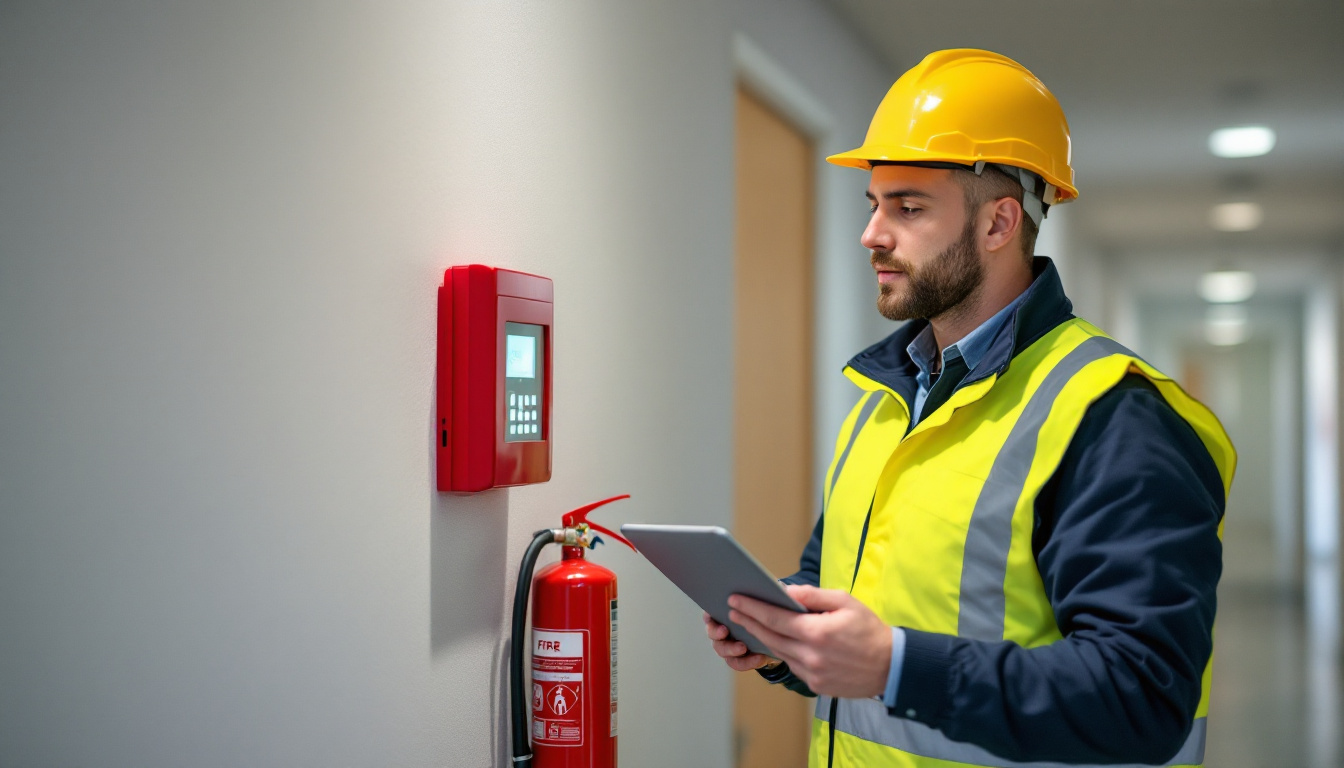
Every workplace and the common parts of most residential blocks in England need a fire risk assessment, and the responsible person has to keep it current and, increasingly, written down. Fire risk assessment software helps structure that assessment, capture the findings with evidence, and — the part that actually reduces risk — track the resulting action plan to completion. This guide covers what to look for, with an honest note on what software can and can't do. (Confirm the specific duties that apply to your premises before relying on any summary here.)
What fire risk assessment software does
- A structured assessment following a recognised methodology (many tools follow a PAS 79-style approach).
- Findings captured with photos and locations, so each hazard is evidenced.
- A risk-rated action plan generated from the findings.
- Action tracking to close-out, with evidence of each fix.
- A clean, dated report and reminders for the next review.
The legal backdrop
The Regulatory Reform (Fire Safety) Order 2005 makes the responsible person carry out and maintain a fire risk assessment. More recent changes — the Fire Safety Act 2021, the Building Safety Act 2022 and the Fire Safety (England) Regulations 2022 — tightened duties and record-keeping, particularly for higher-risk and multi-occupied residential buildings. For the essentials, see what is a fire risk assessment and the Building Safety Act and fire safety duties.
Capturing findings with evidence
An assessment is only as strong as its record. Findings backed by photos, tied to a location, are defensible in a way that a line of text isn't. For the on-the-ground checks that feed an assessment, see the fire risk assessment checklist.
The action plan is the point
A fire risk assessment that identifies hazards but whose actions never close isn't protection — it's a documented liability. The single most valuable thing the software does is turn each finding into a tracked action with an owner, a due date and a verified close-out. That's where risk actually comes down.
What software can't do
Be clear on the limit: software doesn't make an assessment competent. A fire risk assessment must be carried out by a competent person; the tool structures, records and tracks it — it doesn't replace the assessor's judgement. Treat any product claiming to "automate" the assessment itself with caution.
The tools worth knowing
Options range from specialist FRA and building-safety platforms built around a PAS 79-style methodology, to broader EHS suites with a fire module, to general inspection apps used for the capture-and-action side. The specialist tools go deepest on the assessment framework; the inspection apps are lighter and faster for recording findings and driving actions to close.
How to choose
- Does it follow a recognised methodology your assessor is comfortable with?
- Can findings be captured with photos and locations, offline?
- Does it generate a risk-rated action plan?
- Are actions tracked to a verified close-out?
- Does it produce a clean, dated report and prompt the next review?
Where SiteAudit fits
SiteAudit fits the capture-and-action side — recording findings with photo evidence on site, and tracking the remedial action plan to close-out with a defensible, dated record — rather than being a fire-risk-assessment methodology engine. For the assessment framework itself, a specialist PAS 79 tool or, above all, a competent assessor is the right call. Used alongside that, a focused inspection app keeps the findings evidenced and the actions moving — which is where most assessments fall down.
Related articles
Get the Site Audit app
Capture issues, generate reports and finish audits faster — right from your phone.


Site Audit is a free construction site audit app for contractors — download the app or see pricing.