Dry and Wet Riser Inspection and Testing
November 27, 2026
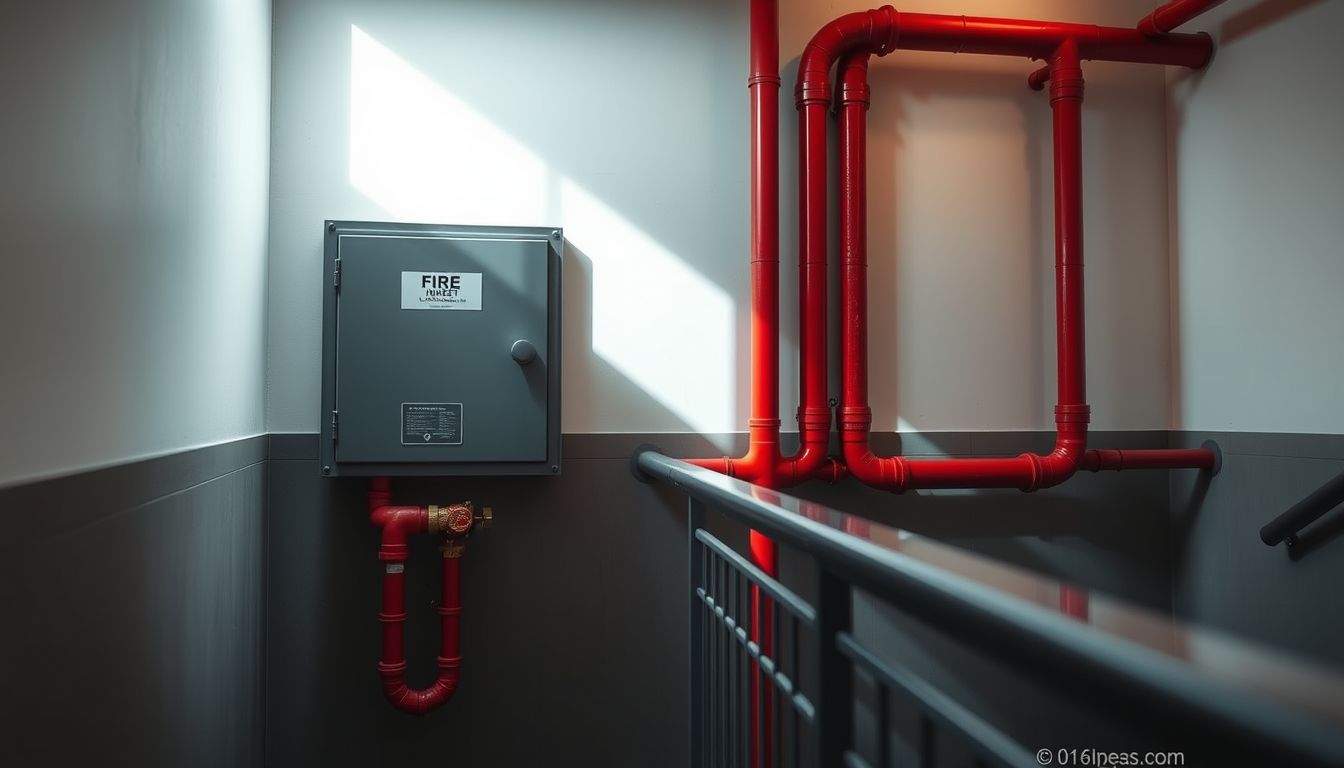
Risers are the pipework that lets the fire service get water to the floor where it's needed, fast, without running hoses up the stairs. In a fire, a riser that doesn't work costs irreplaceable time. Because they sit idle until an emergency, they must be inspected and tested on a schedule. Here's how dry and wet risers differ and what their upkeep involves.
Dry vs wet riser
A dry riser is empty until the fire service connects their pumps at the inlet and charges it — used in buildings up to a certain height. A wet riser is permanently charged with water, fed by tanks and pumps, used in taller buildings where relying on fire-service pumping isn't practical. The maintenance differs accordingly — a wet riser adds the water supply, pumps and tanks to the regime.
What inspection covers
- Inlet and outlet (landing valve) condition and accessibility
- Caps, straps, blanks and padlocks present
- No damage, corrosion or leaks
- Cabinets accessible, signed and unobstructed
- For wet risers: tanks, pumps and water supply
Testing intervals
Risers are subject to regular visual inspection and periodic pressure testing (an annual wet pressure test is the common benchmark, with more frequent visual checks). Wet risers also require pump and supply testing. Always work to the current standard and the system's own requirements rather than memory.
Access is a recurring failure
A common real-world problem isn't the riser itself but access — inlet cabinets blocked, keys missing, outlets obstructed by stored materials. These show up in routine building checks, not just the annual test. See Fire Safety Inspection Checklist for Buildings.
Record it as statutory evidence
Riser testing is part of a building's statutory fire compliance — the records prove it was done and are what a fire risk assessment and the responsible person rely on. See Statutory Compliance Inspections for Buildings.
Where SiteAudit fits
SiteAudit lets you log riser inspections and tests from a template, record results and photos against each riser, schedule the recurring checks, and keep the compliance evidence — so a life-safety system that sits idle is proven ready when it's needed.
Related articles
Get the Site Audit app
Capture issues, generate reports and finish audits faster — right from your phone.


Site Audit is a free construction site audit app for contractors — download the app or see pricing.