Fire Stopping Inspection: What to Check
June 21, 2026
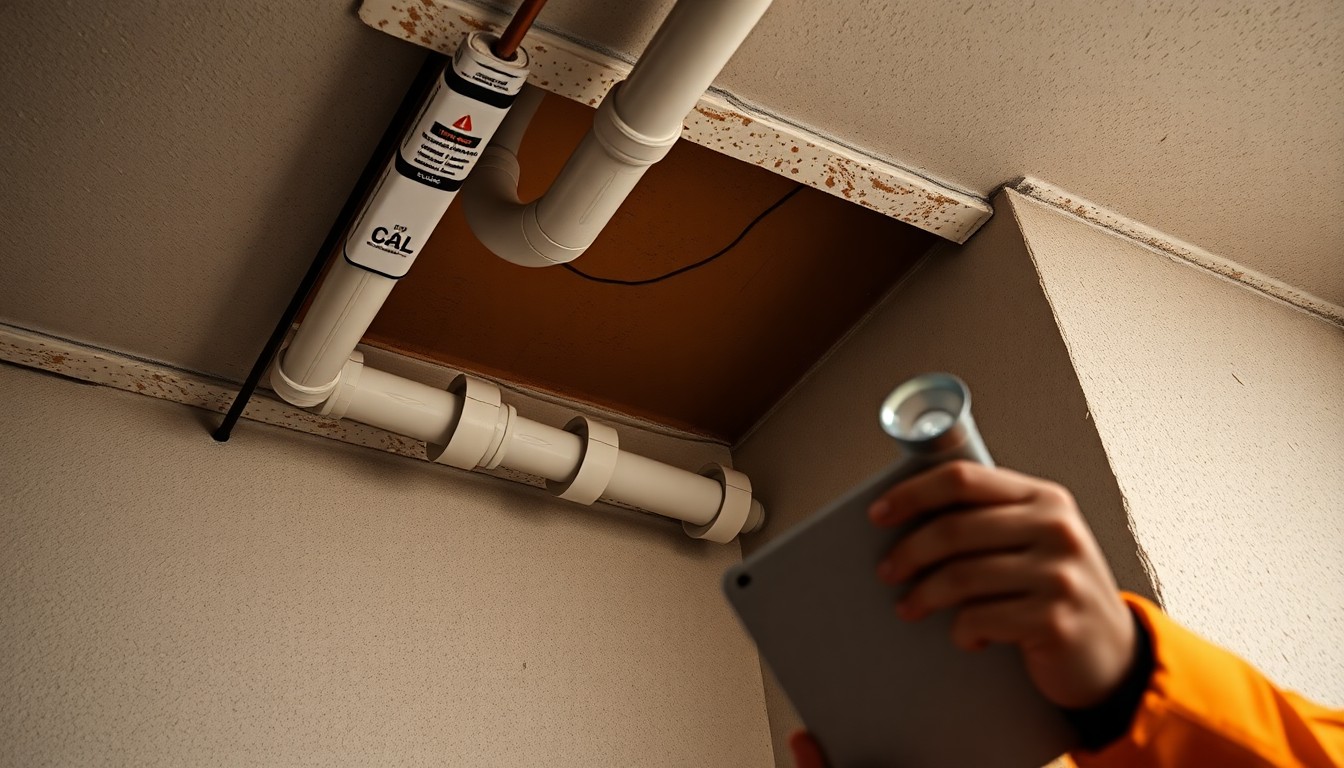
Fire stopping is the sealing of gaps and openings where services pass through fire-resisting walls and floors, so that fire and smoke can't spread through them. It's one of the most critical — and most commonly defective — elements of passive fire protection, because every pipe, cable, and duct that crosses a compartment line is a potential breach. A wall rated for 60 minutes of fire resistance is only as good as the fire stopping around the holes through it.
This article explains what a fire stopping inspection involves and what to check.
Why fire stopping matters so much
Compartmentation works by keeping fire-resisting walls and floors continuous. But buildings are full of services that have to pass through those barriers — electrical cables, water and heating pipes, ventilation ducts, data cabling. Each penetration must be sealed with an appropriate fire stopping system to restore the fire resistance of the element. Miss one, seal one incorrectly, or breach one during later works, and fire and smoke have a path straight through the compartment line.
Where to inspect
Fire stopping is often hidden — above ceilings, in risers and service shafts, in voids, and behind access panels. A thorough inspection means looking in the places services actually pass through compartment walls and floors:
- Service risers and shafts.
- Above suspended ceilings at compartment walls.
- Where cables and pipes pass through walls and floors.
- Around ductwork penetrations.
- At the junction of walls with floors and soffits (linear gaps).
- Around fire dampers and within ceiling voids.
Much of this requires accessing concealed spaces, which is exactly why fire stopping is so often neglected — out of sight, out of mind.
What to check
For each penetration and gap, a fire stopping inspection considers:
- Is it sealed at all? Unsealed penetrations are a common and serious finding.
- Correct system for the situation — the right product/system for the type of penetration, the substrate, and the fire rating required.
- Correct installation — sealant depth, collars, batts, sleeves, or wraps installed per the manufacturer's system.
- Continuity — no gaps, no missing sections, fully closing the opening.
- Appropriate for the services — e.g. intumescent collars or wraps on combustible pipes that need to close the opening as the pipe burns away.
- Linear gaps — head-of-wall and edge-of-floor gaps sealed correctly with movement allowance where needed.
- No subsequent breaches — later cables or pipes pushed through existing seals without reinstatement.
The "right system" problem
Fire stopping is heavily dependent on tested systems — a particular product, installed in a particular way, in a particular construction, to achieve a tested fire rating. A blob of generic sealant around a pipe is not fire stopping. Inspection therefore isn't just "is there something there?" but "is this the correct, tested system, correctly installed?" — which is why competence matters.
Documentation and the "golden thread"
Modern building safety expectations place real emphasis on evidence: what fire stopping system is installed where, who installed it, and proof it's correct. This is part of the building's safety information — the "golden thread" in UK terms. Photographic records of each penetration, the system used, and its condition are increasingly expected, not optional.
Why it gets breached repeatedly
The recurring theme of fire stopping defects is later works. Every time a new cable or pipe is run through a fire-rated wall and the installer doesn't correctly reinstate the fire stopping, a breach is created. This makes ongoing inspection essential — fire stopping that was perfect at handover can be riddled with breaches a few years later.
Capturing it digitally
Fire stopping inspection generates a large volume of location-specific, photo-heavy evidence across concealed spaces. A digital inspection app lets you log each penetration against its location with a photo and status, record the system used, track defects and breaches to closure, and build the documented record that building safety regimes increasingly require.
Key takeaways
Fire stopping seals the gaps where services penetrate fire-resisting walls and floors, restoring compartmentation. Inspect risers, ceiling voids, and every penetration; check that each is sealed with the correct tested system, correctly installed and continuous, with no later breaches. It's commonly compromised by subsequent works, so ongoing recorded inspection — with photographic evidence — is essential.
Get the Site Audit app
Capture issues, generate reports and finish audits faster — right from your phone.


Site Audit is a free construction site audit app for contractors — download the app or see pricing.