Fire Door Inspection: A Complete Guide
June 21, 2026
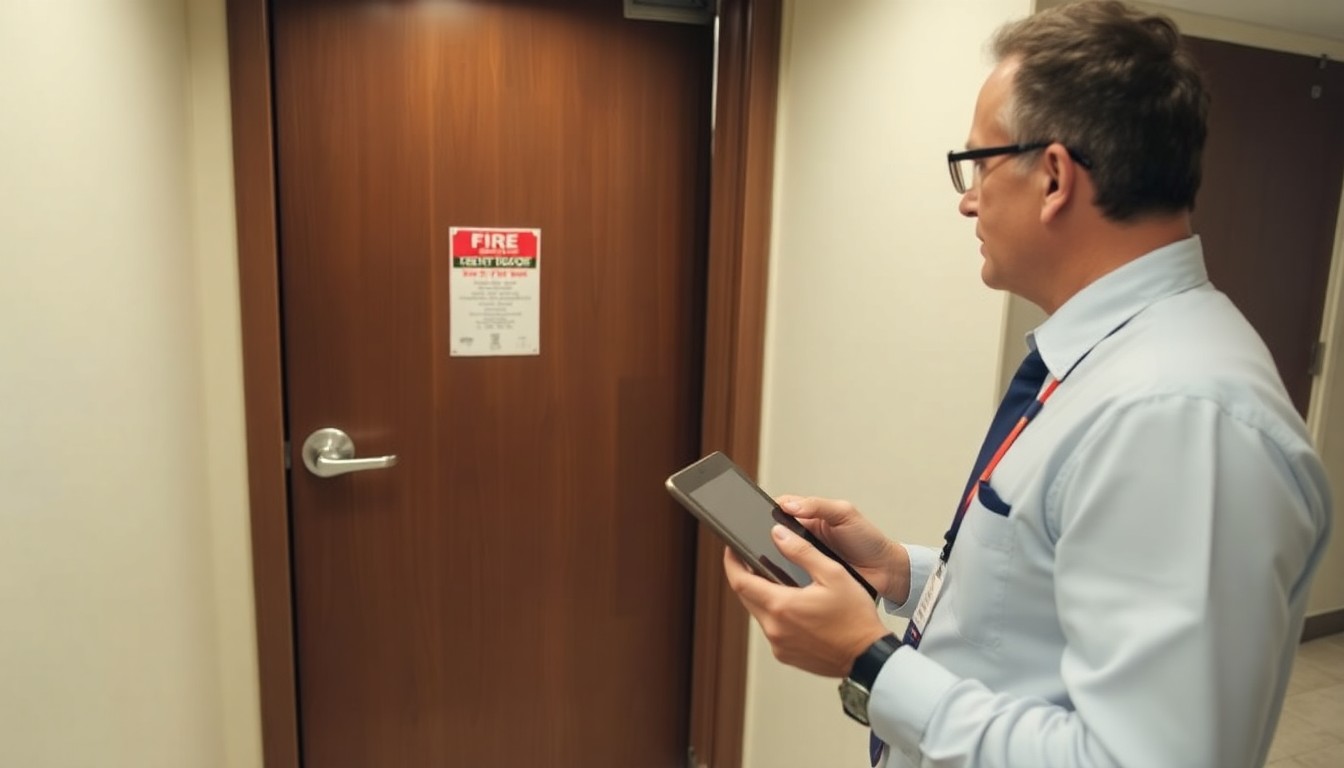
Fire doors are one of the most important — and most frequently failed — elements of passive fire protection. They hold back fire and smoke at the openings in compartment walls, protecting escape routes and buying the time people need to get out. But a fire door only works if it's correctly specified, installed, and maintained, and surveys consistently find large proportions of fire doors with defects that would stop them performing in a fire.
This guide explains what a fire door inspection involves and why it matters.
What a fire door actually is
A fire door is a complete assembly, not just a leaf. It includes the door leaf, the frame, the intumescent and smoke seals, the hinges, the self-closing device, and the hardware — all certified to work together to a fire rating (commonly FD30 or FD60, meaning 30 or 60 minutes of fire resistance). Change or damage any component and the certified performance can be lost.
Why fire doors fail
Inspections repeatedly find the same problems: doors propped or wedged open, damaged or missing seals, excessive gaps around the leaf, self-closers removed or not closing the door fully, damaged leaves, and incorrect or modified hardware. Most of these aren't installation faults — they're the result of wear, misuse, and uncontrolled alterations over time. That's why ongoing inspection, not just installation sign-off, is essential.
What a fire door inspection checks
A competent fire door inspection examines the whole assembly. Key checks include:
- Certification/label — evidence the door is a certified fire door.
- Gaps — consistent gaps around the leaf (typically around 3mm, to specification), checked top and sides.
- Threshold gap — within the specified limit.
- Seals — intumescent and smoke seals present, continuous, and undamaged.
- Self-closer — closes the door fully onto the latch from any position.
- Hinges — correct number (usually three), CE/UKCA marked, secure, no missing screws.
- Leaf and frame — no damage, distortion, or unauthorised holes/alterations.
- Glazing — fire-rated glazing and beading, intact.
- Hardware — locks, latches, and handles correct and functioning.
- Signage — appropriate fire door signage (e.g. "Fire door — keep shut").
Who should inspect fire doors
Fire door inspections should be carried out by a competent person with the knowledge to identify defects and judge whether the door will perform. Responsibility for ensuring inspections happen typically sits with the building's "responsible person" under fire safety legislation. The level of competence required increases with the complexity and risk of the building.
The record is as important as the inspection
Modern fire safety duties place heavy emphasis on demonstrating that fire doors have been inspected and maintained. An inspection that isn't recorded — with each door identified, its condition logged, defects noted, and photos attached — is hard to rely on. The documented history of inspections and remedial actions is increasingly what regulators and building safety regimes expect to see.
Acting on defects
Finding a defect is only useful if it's fixed. Each defect should be logged, assigned, prioritised (a door that won't self-close onto its latch is more urgent than minor signage), rectified by a competent person, and re-inspected. Critical defects on doors protecting key escape routes need prompt action.
Capturing it digitally
A building can have hundreds of fire doors, each needing identification, a checklist, photos, and a tracked status. Paper makes this almost unmanageable at scale. A digital inspection app lets you register each door, run the checklist on a tablet, attach photos to each finding, track defects to closure, and produce the auditable record that fire safety compliance increasingly demands.
Key takeaways
A fire door is a certified assembly that only performs if every component is correct and maintained. Inspections check certification, gaps, seals, the self-closer, hinges, the leaf and frame, glazing, hardware, and signage — carried out by a competent person, recorded with photos, and followed up with tracked remedial action. Given how often fire doors are found defective, regular recorded inspection is essential, not optional.
Get the Site Audit app
Capture issues, generate reports and finish audits faster — right from your phone.


Site Audit is a free construction site audit app for contractors — download the app or see pricing.