Fire Compartmentation Survey: A How-To Guide
June 21, 2026
A fire compartmentation survey checks that a building's fire-resisting compartments are actually intact — that the walls and floors meant to contain a fire are continuous and that every door, penetration, and barrier along the compartment lines is correct. Because compartmentation is so often breached by works carried out after a building is finished, surveys frequently uncover serious, hidden defects. This guide explains how a compartmentation survey is carried out.
A compartmentation survey should be performed by a competent fire safety professional. This guide explains the process; it isn't a substitute for that expertise.
Step 1: Understand the fire strategy and plans
You can't survey compartment lines you haven't identified. The survey starts with the building's fire strategy, drawings, and any compartmentation plans, to establish where the compartment walls and floors are supposed to be and what fire rating each should achieve. Where this information is missing — common in older buildings — establishing the intended compartmentation is itself part of the work.
Step 2: Plan access
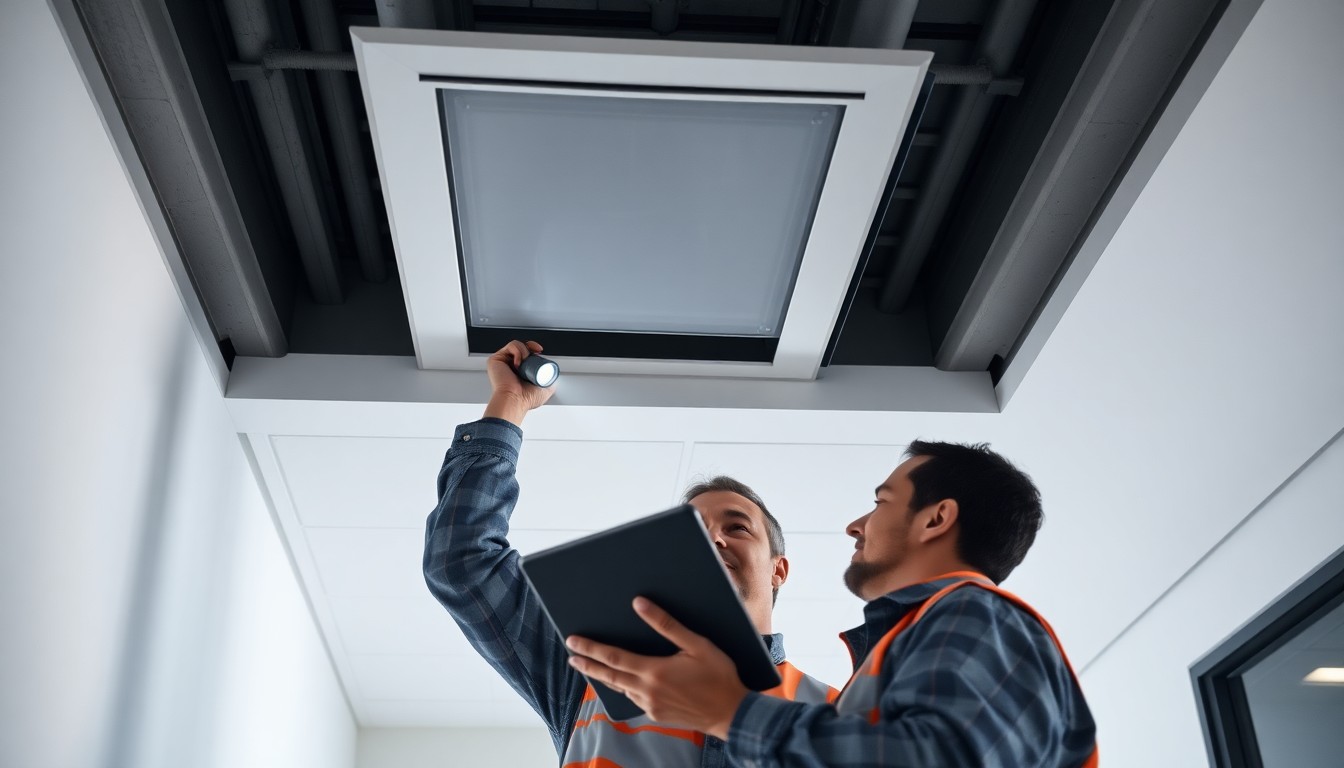
Much of compartmentation is concealed — above suspended ceilings, in risers, voids, and service shafts. A meaningful survey requires access to these spaces, not just the visible rooms. Plan how to reach ceiling voids and risers safely, and note where access is restricted (those areas become caveats in the report).
Step 3: Survey the compartment lines
Work systematically along each compartment line, checking the elements that maintain it:
- Walls and floors — fire-resisting construction continuous and to the slab/structure above (not stopping at a suspended ceiling).
- Penetrations — every pipe, cable, and duct sealed with correct fire stopping.
- Fire doors — present, correct, and in good condition at openings.
- Cavity barriers — present in voids and cavities along the line.
- Fire dampers — where ducts cross the line.
- Junctions — wall-to-floor and wall-to-soffit gaps sealed.
For each defect, record what it is, exactly where it is, its severity, and a photo.
Step 4: Look for the classic hidden defects
Experienced surveyors know where compartmentation typically fails: walls that stop at the ceiling rather than continuing to the slab; unsealed service penetrations in risers; missing cavity barriers after refurbishment; and breaches created by recent cabling. The concealed spaces are where the serious findings usually are, which is why access matters so much.
Step 5: Assess and prioritise
Not every defect is equally urgent. A large unsealed penetration on a key escape-route compartment line is critical; a minor gap in a low-risk location is less so. The survey should rate findings by risk so remediation can be prioritised — fixing the breaches that most undermine the fire strategy first.
Step 6: Report with evidence
The output is a survey report that identifies each defect with its location, severity, photo, and recommended remediation, ideally referenced to the building plans. This becomes a core part of the building's fire safety information and the basis for a remediation programme.
Step 7: Remediate and re-survey
Findings are only useful when acted on. Each breach should be remediated by a competent installer using correct systems, then re-inspected and recorded as closed. The compartmentation survey thus feeds an ongoing cycle of survey → remediate → verify.
Why records and the "golden thread" matter
For higher-risk buildings especially, demonstrating intact compartmentation — with evidence — is now a central building safety expectation. A compartmentation survey that produces a clear, photo-backed, plan-referenced record contributes directly to the building's "golden thread" of safety information.
Capturing it digitally
A compartmentation survey generates a large, location-specific, photo-heavy dataset across many concealed spaces. A digital inspection app lets the surveyor log each finding against its location on the plan with photos and severity, track remediation to verified closure, and produce the structured, auditable report that building safety regimes increasingly require.
Key takeaways
A fire compartmentation survey verifies that compartment walls and floors are continuous and that doors, penetrations, cavity barriers, and dampers along the lines are correct. It requires the fire strategy, access to concealed spaces, systematic checking, risk-based prioritisation, and an evidenced report — carried out by a competent professional. Because compartmentation is so often breached after construction, surveys regularly find serious hidden defects, making recorded, remediated surveys essential.
Get the Site Audit app
Capture issues, generate reports and finish audits faster — right from your phone.


Site Audit is a free construction site audit app for contractors — download the app or see pricing.