Common Fire Door Defects (and How to Spot Them)
June 21, 2026
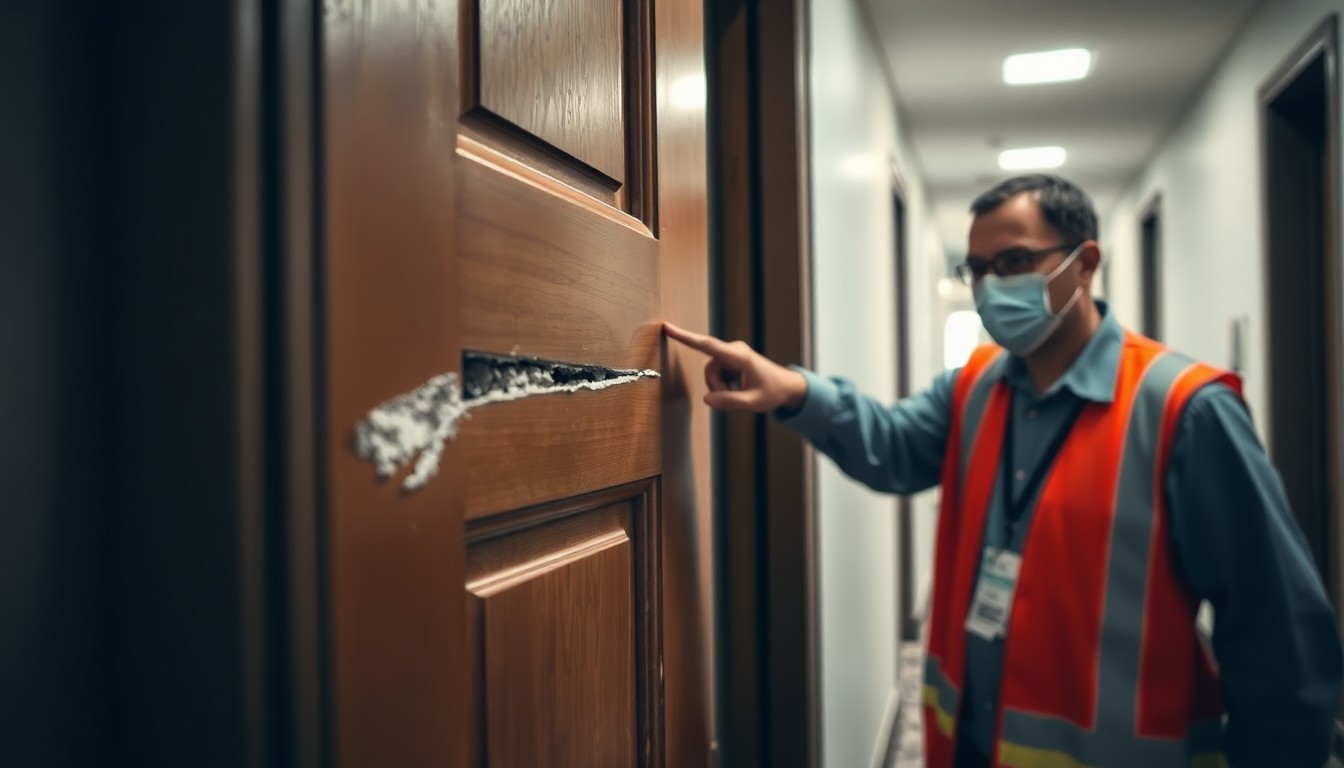
Fire door surveys consistently find that a large proportion of doors have defects that would stop them performing in a fire. The encouraging news is that the same handful of defects come up again and again — so knowing what to look for makes inspection faster and more effective. Most are caused by wear, misuse, or uncontrolled alterations rather than original installation faults, which means they're preventable and fixable.
Here are the most common fire door defects and how to spot them.
Doors wedged or propped open
The most visible and most dangerous defect. A fire door only works closed, so a door held open with a wedge, an extinguisher, or a hook defeats its entire purpose. Spotting it is easy; the harder part is changing the behaviour behind it. Where doors genuinely need to stay open, compliant hold-open devices that release on the fire alarm are the answer.
Self-closer not closing the door fully
A fire door must close completely onto its latch from any position. Common faults: the closer is too weak to overcome the latch or seals, it stops short, or it's been disconnected or removed entirely. Test by opening the door to various positions and watching it close — if it doesn't latch shut every time, it's a defect.
Damaged, missing, or painted-over seals
Intumescent and smoke seals are critical and often compromised. Look for seals that are torn, missing sections, painted over (which can stop them expanding), or simply absent. Run your eye along the full perimeter of the seal in the frame or leaf.
Excessive or uneven gaps
The gap around the leaf should be consistent and within specification (commonly around 3mm). Gaps that are too wide let fire and smoke pass; gaps that are too tight can stop the door closing. Uneven gaps often indicate a dropped or warped door. A gap that daylight shows through is an obvious flag.
Damaged leaf or frame
Holes, deep gouges, splits, delamination, or warping in the leaf, and damage or movement in the frame, can all compromise performance. Watch especially for unauthorised holes — old lock cut-outs, cable holes, or vision panels added without fire-rated detailing.
Hinge problems
Look for missing or loose screws, the wrong type of hinge, fewer hinges than required (usually three for FD30), or hinges showing signs of fatigue. Missing screws are extremely common and easy to spot.
Incorrect or modified hardware
Non-fire-rated handles, locks, or letterplates; modifications that breach the leaf; or hardware that stops the door latching. Any aperture or fitting in a fire door needs to maintain its integrity.
Unauthorised alterations
Anything added or changed after certification — a cat flap, a non-rated vision panel, a drilled hole for a cable — can void the door's performance. These are easy to miss because they look "finished", so check for anything that wasn't part of the original certified assembly.
Missing or incorrect signage
Less critical than the physical defects, but still a finding: fire doors should carry appropriate signage (e.g. "Fire door — keep shut"), and its absence is part of a complete inspection.
Why photographing defects matters
Because many of these defects are subtle and location-specific, a photo against each one — showing the damaged seal, the gap, the missing screw — makes the finding actionable and provides the evidence trail. Across hundreds of doors, that photographic record is what lets remedial work be prioritised and verified.
Capturing it digitally
A fire door inspection app lets you log each defect against the specific door with a photo and severity, assign it for remedial work by a competent person, and track it to verified closure — turning a list of common defects into a managed, auditable programme of fixes.
Key takeaways
The most common fire door defects are: doors wedged open, self-closers not latching the door shut, damaged or painted-over seals, excessive or uneven gaps, damaged leaves and frames, hinge faults, incorrect hardware, unauthorised alterations, and missing signage. Most are caused by wear and misuse, so they're preventable. Photograph each defect, prioritise by risk, and track every fix to closure.
Get the Site Audit app
Capture issues, generate reports and finish audits faster — right from your phone.


Site Audit is a free construction site audit app for contractors — download the app or see pricing.